
In recent decades Richmond has been aggressively developing its waterfront. Brickyard Cove, near Ferry Point, was once the location of a brick-making plant that used materials quarried from the nearby hillside. It is now an enclave of luxury homes and condominiums, along with a lively marina housing the Richmond Yacht Club, all set cheek to jowl with the industrial warehouses and tanks lining the city’s nearby deepwater harbor.

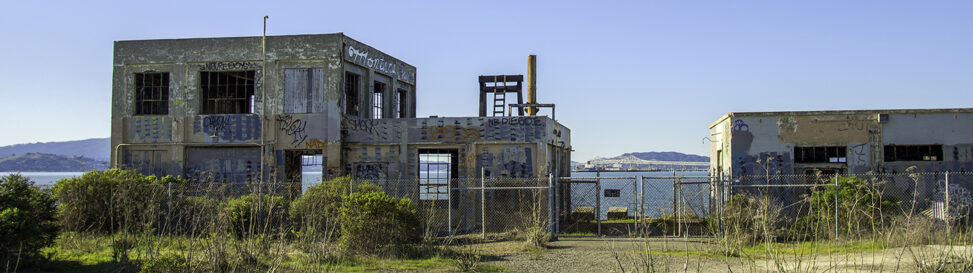
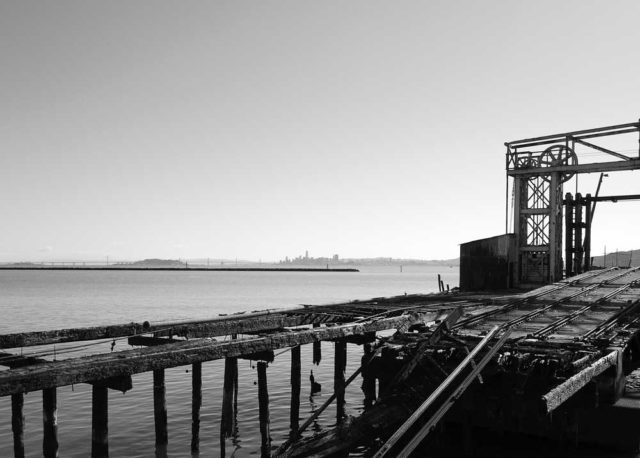
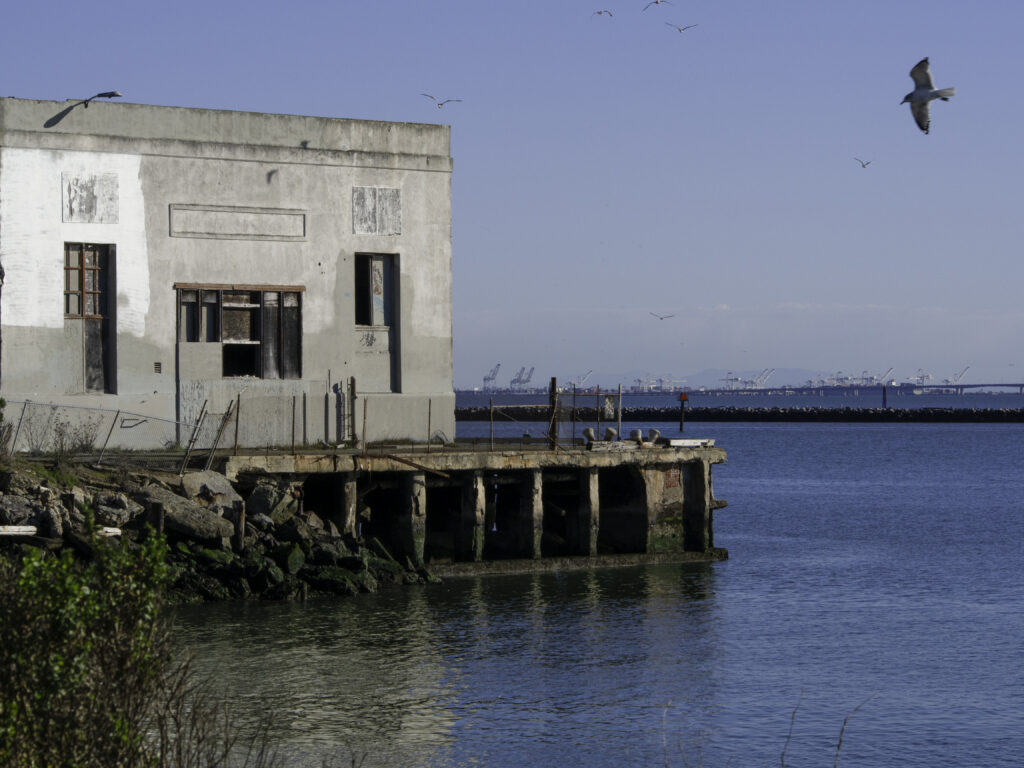
Yet vestiges of the old waterfront remain, for now. One is Ferry Point, where the skeleton of an old ferry terminal remains, alongside a fishing pier maintained by the East Bay Regional Park District as part of the Miller/Knox Regional Shoreline. The pier was opened to the public in 2002.
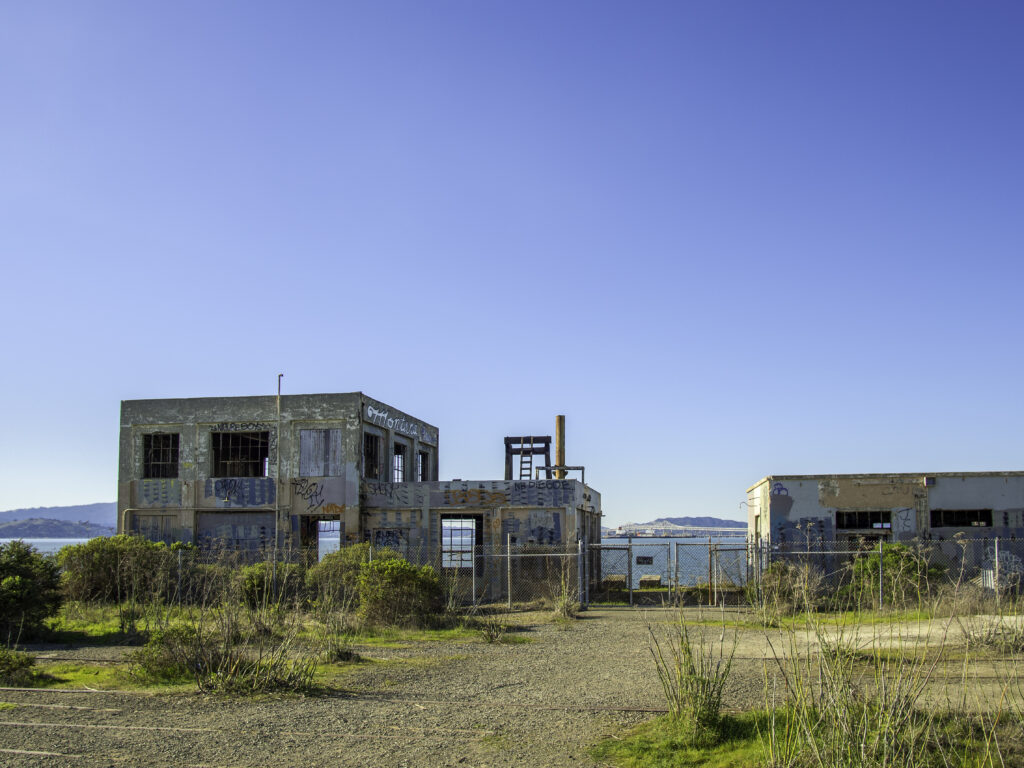
The Santa Fe Railroad’s transcontinental track terminated in Richmond. From here travelers and cargo were placed on ferries for the final journey across the bay to San Francisco. The service opened with fanfare in 1900, but later in the century, following the construction of the Bay Bridge in 1936, ferry use declined. Santa Fe’s own ferry service ended in 1933, but other operators continued to use the landing as late as 1975 before the service finally died out. A fire in 1984 further contributed to the landing’s current derelict appearance.
In 2019 a new San Francisco Bay Ferry launched from a terminal at Ford Point in the Marina Bay district of the Richmond Inner Harbor, a couple of miles to the east. The ferry no longer transports cargo, but it provides passengers with a pleasant connection to the city. The trip takes about 35 minutes, and parking at the terminal is free.

Miller/Knox Park park offers a lazy lagoon frequented by waterfowl, dog walkers, and parents pushing strollers; a green shoreline suitable for picnicking; and a small sand beach, as well as steep hiking trails that ascend to magnificent views in all directions. (It’s also possible to reach most of the way to the highest point, Nichol Knob, by car. Access is near the Point Richmond tunnel.) Plans are underway for a revamp of the park. One can only hope that the results are positive. I hope the old ferry landing stays much as it is, as a harbor for aquatic life and a reminder of the region’s history.

“Writer and pierfisherman” Ken Jones writes of Ferry Point as a fishing location, “The pier extends 550 feet into the bay in waters that are home to perch, jacksmelt, kingfish (white croaker), brown rockfish, starry flounder, halibut, sharks and rays. In addition, these waters are prime migratory paths for striped bass, sturgeon and salmon during the appropriate seasons.”
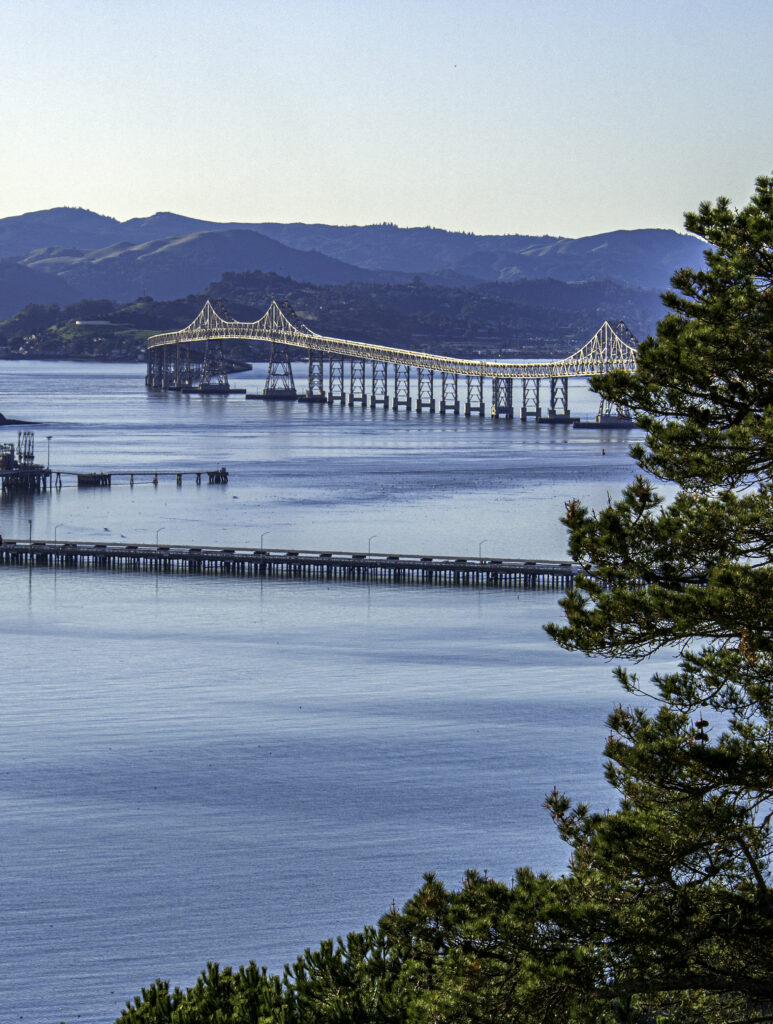
This post was originally published Feb. 14, 2018. I’ve brought it over here as part of the move of this blog from its previous location. In so doing I have taken the opportunity to update the text a bit and improve most of the images. But I have not recently revisited the Ferry Point site to see what has changed.
According to pierfishing.com, writing in August 2024, “they are … removing the old pilings from the original ferry pier that once was used to transport people to San Francisco. The pilings are rotting away, breaking off in some cases, and considered a danger to boats. Thus the removal of the pilings although the new pier itself is untouched and the old metal part of the ferry landing will be left standing (it sits on concrete). The hopes are that eel grass beds will be established where the pilings originally were located.”
That doesn’t sound too bad.
Leave a Reply